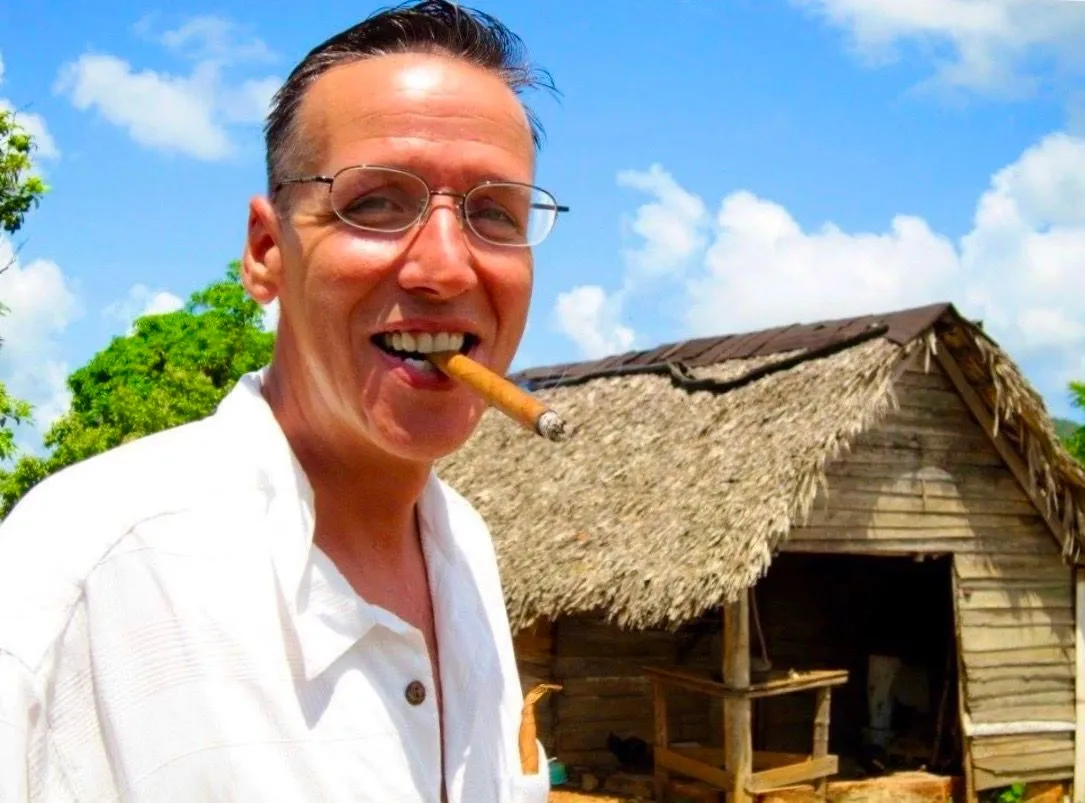
Benito snatched the cigar right out of my hand.
I had rolled it wrong. He didn't say a word. He rolled it again in front of me, slowly, then handed me a few dried tobacco leaves and pointed at the board. Go ahead. Again.
We kept at it until I got it right. Then he started laughing and smiling and patting me on the back, and he lit my cigar.
I am not a smoker. I had never smoked a cigar in my life. But when in Rome, as they say. So I smoked a Cuban cigar with Benito, on his tobacco farm in Pinar del Rio, Cuba.
Out to tobacco country
This was the same July 2012 trip I wrote about in "They Will Name Their Children After You."
Some local friends I had met in Cuba knew a tobacco farmer. They knew I was a traveler and thought I would enjoy meeting him. So five or six of us got on a bus and rode out to Pinar del Rio, a couple of hours west of Havana.
I want to be clear about one thing. This was not a tour. Tourists don't get to do this. It was a private, working farm. Benito does not make his living from visitors. He makes it from tobacco.
Why Pinar del Rio
Pinar del Rio is Cuba's westernmost province, and it grows most of Cuba's tobacco. Some of the best tobacco in the world comes from there. It is a big part of why Cuban cigars are so prized, and so expensive.
The land is beautiful, and strange. Steep limestone hills rise straight up out of flat green valleys. In the Vinales Valley, those hills are called mogotes, and the valley is a UNESCO World Heritage Site. The day after the farm, I got to hike in those hills and explore a few of the caves that dot them. I saw other tobacco farms, and tractors, and the most rural parts of Cuba.
It was July, very hot and very humid. They get a lot of rain there, which makes it perfect for growing tobacco. Everything was green.
Benito's farm
Benito's farm doesn't have a name. It is just Benito's.
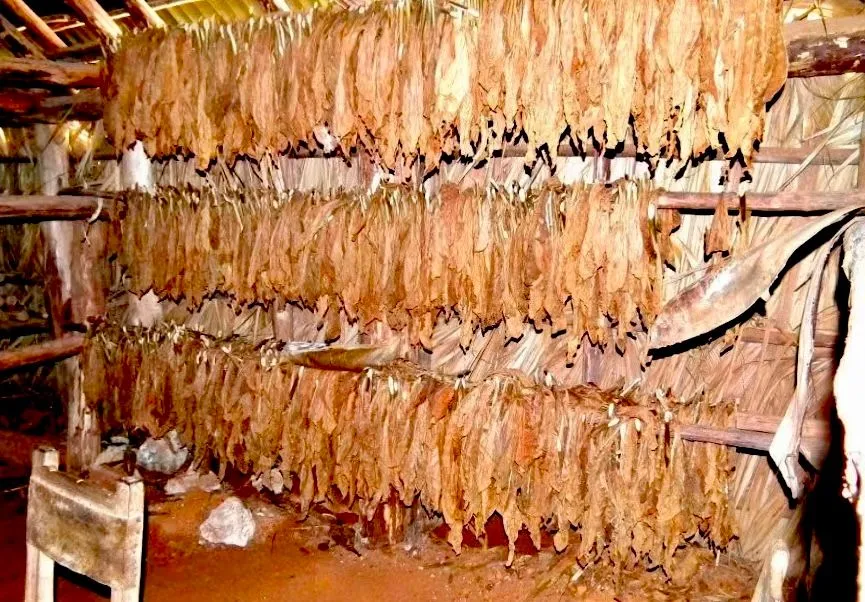
I think he was a little suspicious of us at first. The embargo was still in effect, and you did not see many Americans in Cuba in those days. But once he saw how fascinated I was, and how much I admired what he did, he warmed right up.
He walked me through the whole thing. The fields where the tobacco grows. The drying barn where the leaves hang. How you grow it, how you harvest it, how you dry it.
There was a language barrier. They don't speak English, and I don't speak Spanish. We got along fine anyway.
The rolling table
Then came the best part. Benito sat me down at the board where you roll the tobacco and taught me how to make a Cuban cigar by hand.
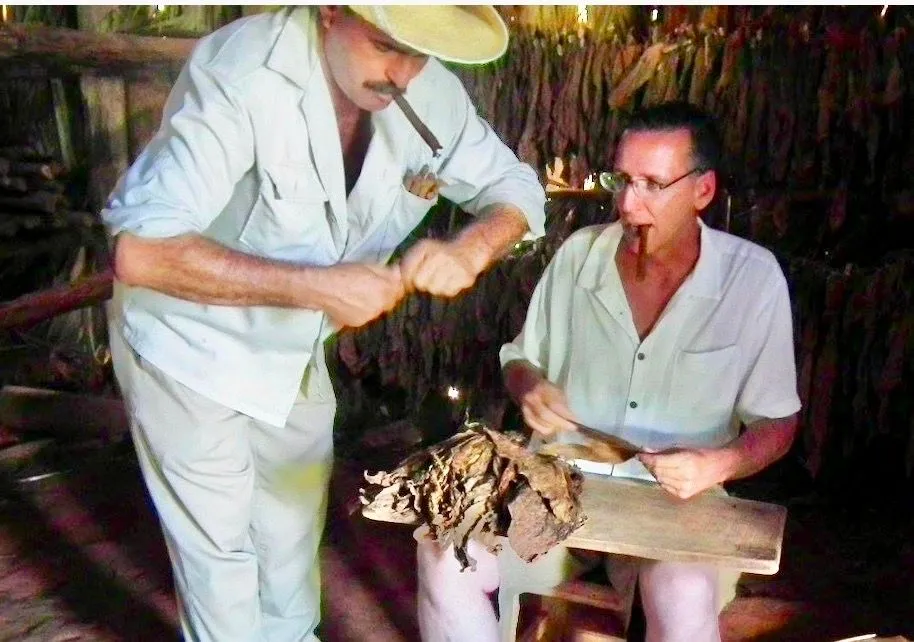
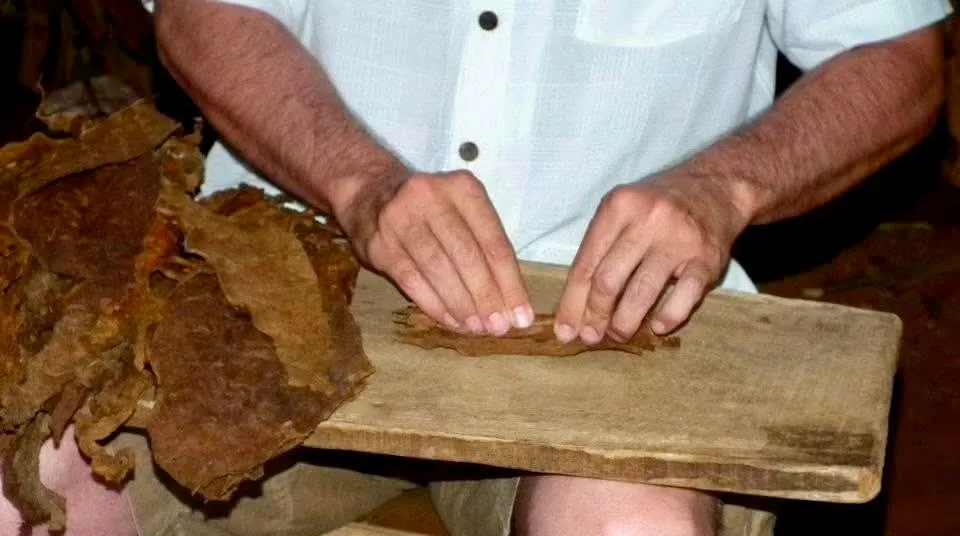
You use all ten fingers. You have to roll it just right. Not too tight, not too loose. I have some great photos of the two of us at that table, Benito leaning over and showing me how.
It took me several tries. When I finally made a cigar worth smoking, that is the one he lit.
Why Cuban cigars are such a big deal
Americans have not been able to buy Cuban cigars at home for more than 60 years. That is a big part of the legend.
President John F. Kennedy loved Cuban cigars. His press secretary, Pierre Salinger, later told the story of the night before Kennedy signed the embargo in February 1962. Kennedy asked him to find as many Cuban cigars as he could, by the next morning. Salinger came back with about 1,200. Then Kennedy signed the order.
When you can't get something, you want it more. I knew all that going in, so to sit at Benito's table and learn to roll one myself was a highlight of the whole trip.
What I took home
He was all business while he taught me. Then the cigar was lit, and we were just two guys on a farm, laughing. Some of the best days of that trip were the ones where somebody else was the teacher.